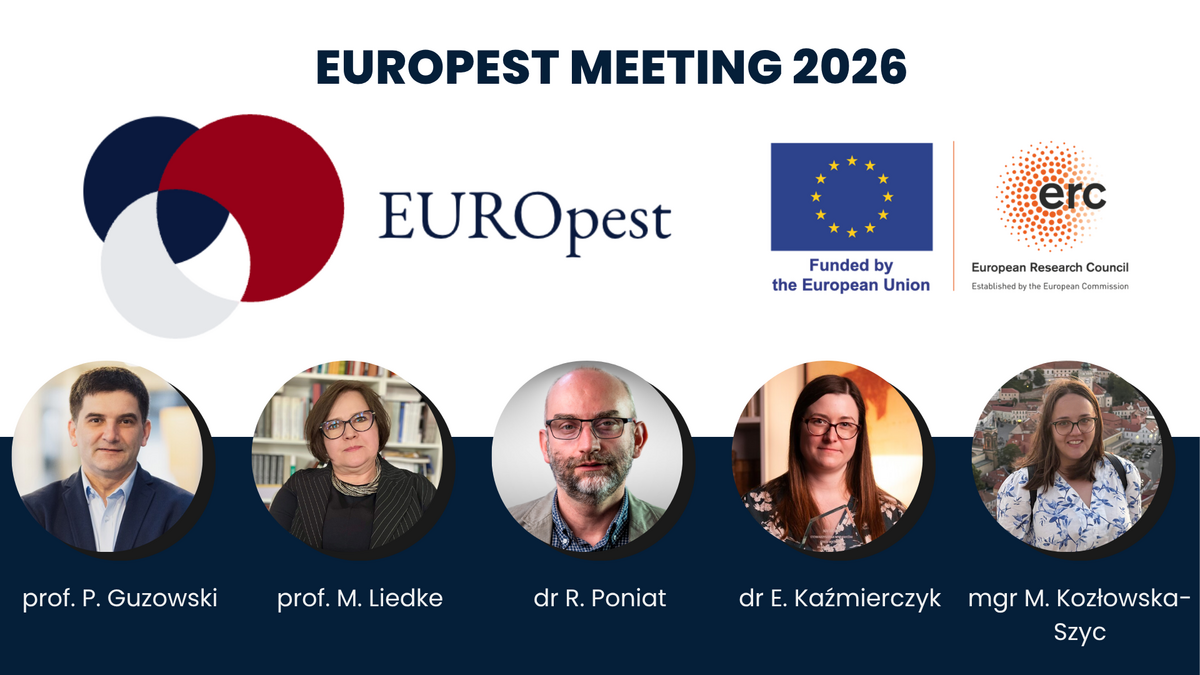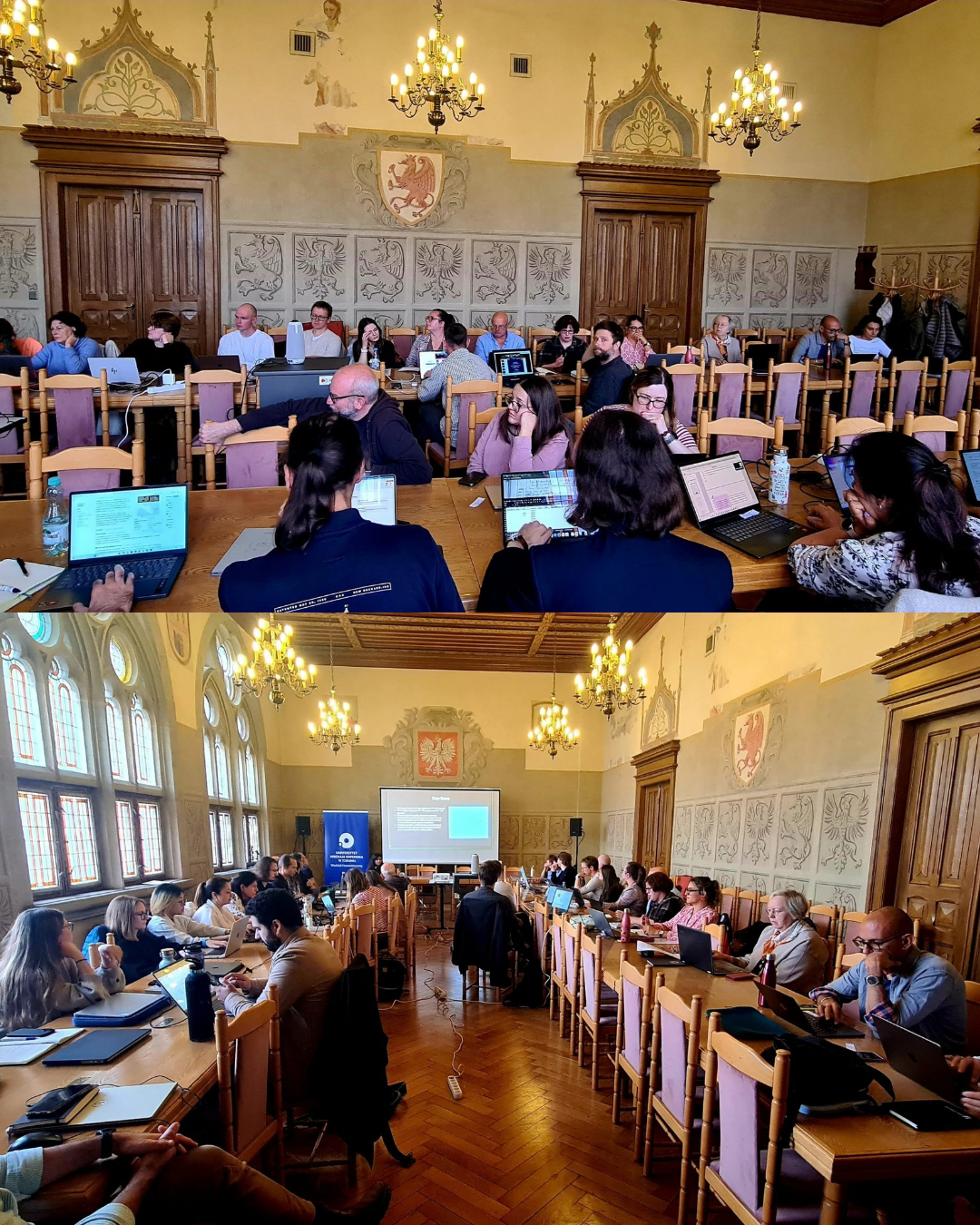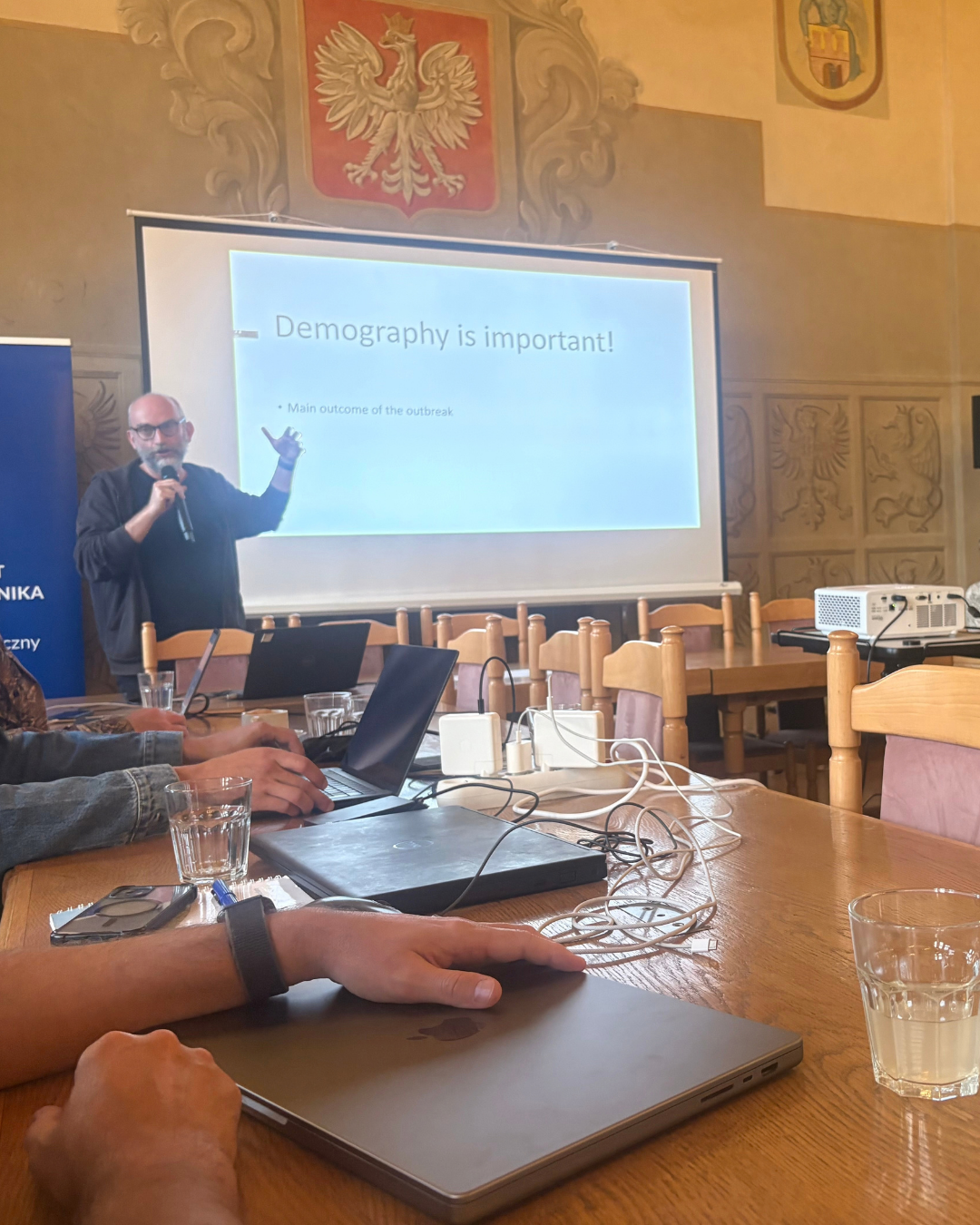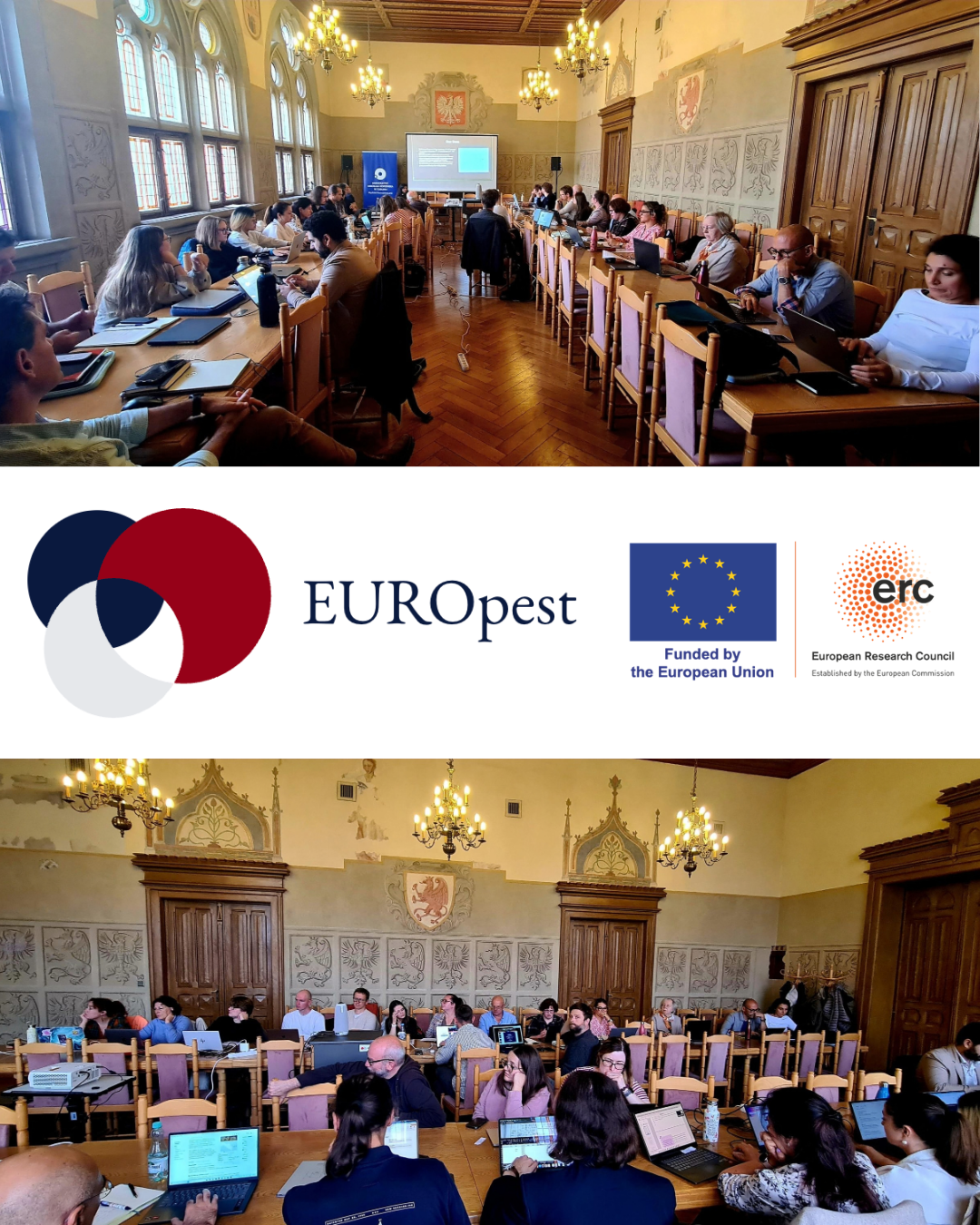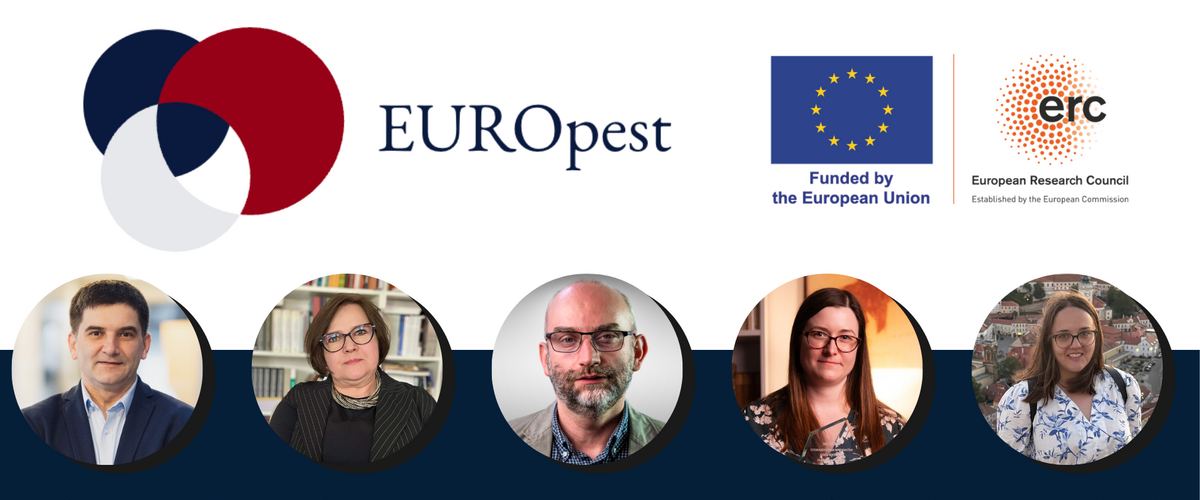
From 5 to 8 October 2026, Toruń hosted EUROpest 2026 Meetings, an international gathering of researchers studying historical epidemics and their demographic, social, economic and environmental determinants and consequences. The event was also attended by researchers from the Faculty of History at the University of Białystok: Prof. Piotr Guzowski, Prof. Marzena Liedke, Radosław Poniat, PhD, Ewa Kaźmierczyk, PhD and Monika Kozłowska-Szyc, MA.
The meeting was organised as part of the international research project EUROpest, “Revisiting the Role of Pandemics in Pre-Industrial Europe (1300–1800): History, Natural Sciences and Machine Learning”, led by Prof. Adam Izdebski. The project is funded by a prestigious European Research Council (ERC) Synergy Grant, which supports ambitious research initiatives requiring close collaboration between scholars from different disciplines.
The main objective of EUROpest is to gain a better understanding of the causes, spread and consequences of epidemics that affected Europe between 1300 and 1800, with particular emphasis on plague. One of the project's central research questions is why epidemics caused by the same pathogen had such different effects across European regions. To address this question, researchers combine historical research with archaeogenetics, palaeoecology, palaeoclimatology, epidemiological modelling and machine learning methods.
A research team from the Faculty of History at the University of Białystok, led by Prof. Piotr Guzowski, is also involved in the project. The historians focus on reconstructing the demographic, economic, social and cultural conditions surrounding historical epidemics and analysing their consequences. Drawing on parish registers, tax records, population censuses and other historical sources, they investigate demographic changes, migration, household structures, economic conditions and living standards. An important aspect of their research is to reconstruct the context in which epidemics broke out and to identify the factors that may have influenced their course and consequences.
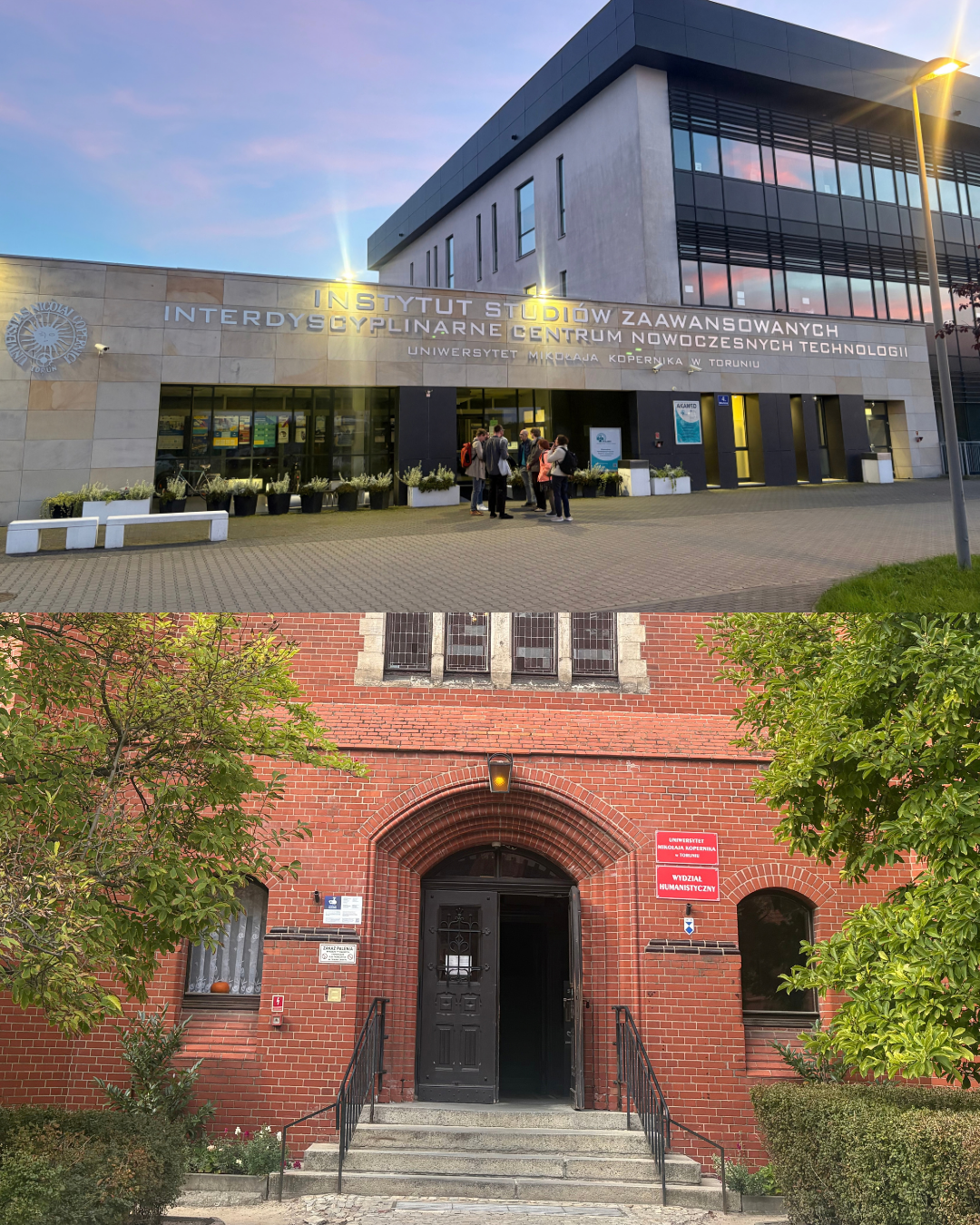
The EUROpest 2026 Meetings programme began on 5 October with workshops for historians held at the Institute for Advanced Studies in Toruń. Their primary aim was to coordinate historical research conducted across different regions of Europe and to establish common principles for collecting and processing data on historical epidemics.
Participants worked on developing a research questionnaire designed to facilitate detailed analyses of selected epidemic outbreaks. Discussions covered a range of topics, including demography and the economy, material and non-material culture, political institutions and health conditions. The participants also explored the potential applications of large historical text corpora and large language models (LLMs) in historical research. Another important part of the workshops involved developing a shared historical knowledge base that would enable comparisons of the course and consequences of epidemics across different parts of Europe.
Over the following days, the meeting continued at Collegium Maius of Nicolaus Copernicus University, bringing together representatives of all the disciplines involved in the project. The programme included lectures, presentations of research findings and discussions on topics such as epidemic modelling, ancient DNA (aDNA) analysis, climate reconstruction, pollen analysis and changes in land use.
Progress in fieldwork involving the collection of sediment cores in Lithuania and south-eastern Poland was also presented. Particular attention was devoted to the possibilities of integrating historical, genetic and environmental data, an approach that forms one of the key methodological foundations of EUROpest.
EUROpest 2026 Meetings provided an opportunity to present research findings to date, discuss the next stages of the project and strengthen international scientific collaboration. The participation of historians from the University of Białystok in this initiative highlights the importance of historical research in interdisciplinary projects that combine traditional source analysis with cutting-edge methods from the natural sciences and digital technologies.